
A look at school in Japan (part 1): educational practices
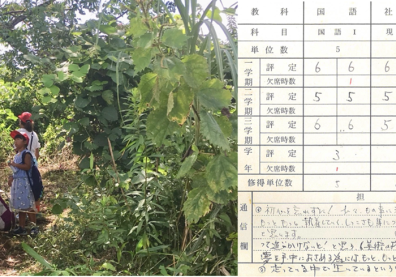
Gaëlle Redjdal, PhD student (Inalco-IFRAE, Tôkyô Metropolitan University)
"Yagai kyōiku 野外教育: état des lieux d'une éducation en plein air dans la société japonaise contemporaine"
This presentation aims to explore the different contexts that give children the opportunity to have experiences in the great outdoors, shizen taiken 自然体験, and to be in contact with living things in contemporary Japanese society.
Mixing anthropology with an architectural approach, the aim will be to draw up an inventory of places and times conducive to outdoor education, which any child living in the Japanese archipelago could be led to experience in his or her daily life, in the city as well as in the countryside.
The types of school, after-school and extracurricular structures that enable outdoor education will be identified, in order to define both the place accorded to this education by the Japanese education system, and that which it occupies more generally in the lives of children in Japan.
Following an attempt to define outdoor education, the aim will be to explain the reasons for the existence of this alternative form of education, addressing the socio-educational, health and environmental issues it seeks to address, and which make it necessary in today's Japanese society. The future ethnographic fieldwork planned in Japan and the methodology employed will finally be outlined, following this initial groundbreaking work carried out beforehand.
Marine Depléchin, PhD student (Inalco-IFRAE), Université Toulouse-Jean Jaurès
"L'évaluation scolaire des élèves au Japon, un enjeu de tensions"
From 1955 until 2001, the assessment of students' academic skills was organized around a dual structure, "absolute assessment - relative assessment". This dual modality, defined in the Ministry of Education's circulars on the student record book, was then closely linked to the function of this book, entitled since 1949 shidō yōroku 指導要録. Introduced as early as 1900 under another name, gakusekibo 学籍簿, it was then already being used to record students' academic results and, since the 1920s, to select candidates wishing to continue their schooling at higher level. In 2001, the disappearance of the relative modality in the assessment of school skills put an end to this duality, while the functions of the livret remained unchanged, which is today a source of uncertainty and tension, for pupils and their families but also for teachers.
This paper proposes to revisit the issues of the livret scolaire in relation to student assessment, evoking its role in candidate admissions policies, at collège pre-war and lycée post-war, as well as the evolution of grading modalities that it imposes on teachers.
Distance participation possible.
Contact the organizers:
Christian GALAN View e-mail
Marine DEPLECHIN View e-mail