
Seminar report | Institutions, civilisation, and freedom: Taha Hussein's anti-colonial project | 20 October 2026
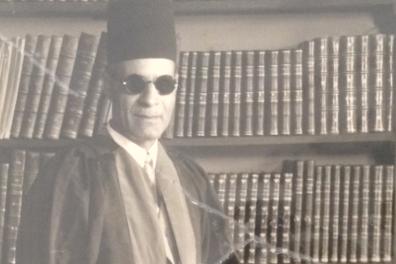
This lecture examines Taha Hussein (1889-1973) — an Egyptian scholar and civil servant, a towering figure of modern Arabic literature and a leading voice of the Nahda, the Arab cultural renaissance — as an institution-builder whose response to colonialism was cultural and educational, rather than merely political.
Key takeaways
1) A different response than the way anticolonial thought is usually framed
1) A different response than the way anticolonial thought is usually framed
Taha Hussein’s response to what he saw as a civilisational challenge rested on neither rejection nor imitation, modernity nor heritage, Egyptian authenticity nor the West, but on the conviction that knowledge, education, and enterprise could transform society. He believed rejection alone would not necessarily persuade those in power. The stronger response, in his view, was to make their arguments increasingly implausible by building Egypt’s institutional framework, its own advanced expertise, and by playing by the very standards that Europe itself claimed to uphold.
2) Education, democracy, and institution building were interdependent
2) Education, democracy, and institution building were interdependent
His vision remained consistent throughout his life: independence and freedom required institutions capable of producing knowledge, educating citizens, and renewing intellectual life. Those were the foundations of a stronger and modern society.
3) The quest for independence and a certain view of the international order
3) The quest for independence and a certain view of the international order
He spent his life building strong education and institutions to achieve political independence and a culture rooted in Arab and Islamic tradition. For him, education, knowledge and elements of the European path were needed to become an equal contributor to “modern civilisation“. In addition, he constructed a narrative that emphasised Egypt's longstanding connection to the Mediterranean world and its participation in broader currents of human “civilisation“.
Items of attention
-
Although he is often remembered as a literary critic and scholar, it is worth recalling how much energy he devoted to strengthening the educational system in Egypt.
-
His career is a reminder that ideas also acquire meaning through the institutions, policies, and practices intellectuals help create.
-
The later consolidation of the authoritarian state, which absorbed many of the institutions he helped build, suggests that institutions without political freedom can be turned to other ends.
Book
AHMED, Hussam R. The Last Nahdawi : Taha Hussein and Institution Building in Egypt. Stanford University Press. 2021. 312 pages.
The content and analyses presented in this report are intended to reflect the focal points of the seminar. They are shared by the Programme DÉCRIPT team for informational and educational purposes only and do not necessarily reflect the views of the speaker or the speaker’s affiliated institution.
DECRIPT is a research program led by Inalco (Paris) and funded by France 2030. This workshop received government funding managed by the ANR, reference ANR-24-RSH-0002.