What’s in a Shāhnāma manuscript? Reflections on the Shāhnāma manuscript tradition
Avec le Prof. Gabrielle van den BERG, Université de Leyde
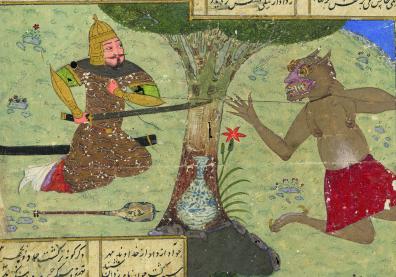
What’s in a Shāhnāma manuscript? Reflections on the Shāhnāma manuscript tradition via the 15th -century Shāhnāma manuscript copy preserved in Leiden University Library
A comprehensive inventory of Shāhnāma manuscripts preserved to this day is impossible to make, even though the Cambridge Shāhnāma Project has given us quite some insight into the scope and nature of illustrated Shāhnāma manuscripts. On the basis of the findings of this and other projects related to the study of the Shāhnāma manuscript tradition, it can be concluded that each Shāhnāma manuscript is unique, and may contain hidden treasures that cannot be found in other manuscripts: at the same time, each manuscript also closely follows previous models. In this lecture, some notable features of the Shāhnāma as transmitted through manuscripts will be discussed by taking a closer look at what may seem to be at first sight an “ordinary” Shāhnāma manuscript, namely the 15th-century Timurid manuscript copy Or. 494, the only illustrated Shāhnāma copy kept in the manuscript collection of Leiden University Library, and one of the manuscripts used by the much lamented Djalal Khaleghi Motlagh for his edition of the Shāhnāma.